
I wanted local people who were curious about n8n to have somewhere they could see it working, ask questions, and meet other people building automations. The first gathering was tiny. That turned out to be useful.
Why I started a local n8n meetup
I found n8n while looking for a better way to manage increasingly complicated automation work. I had Python scripts, Bash files, and logs doing useful things, but the workflows were difficult to see as complete systems.
The visual, node-based model clicked immediately. I had enjoyed similar ways of thinking while building VR games, and n8n gave me that same visibility without taking away the ability to write code when the workflow needed it.
I was already participating in the online n8n community. Becoming an ambassador and organizing something in St. Louis was a practical next step: give local people a place to see the tool, ask questions, and meet others working with automation. I described that path in my contribution to n8n’s fifth-birthday thread .
Meetup one: start with the people who show up
For the August meetup, seven people registered and three came to Arnold Park. We grilled, talked about the community, and traded ideas for future jam sessions. It was deliberately informal.
A three-person turnout could look disappointing if the only measure were attendance. It was useful in a different way: everyone had room to speak, I could hear what people wanted from the group, and we left with concrete ideas for the next gathering. I documented the event with photos and a public August meetup report on the n8n forum .
Meetup two: give the gathering a technical center
On November 9, we met at the new St. Louis County Library branch. Seven people came despite a downpour, more than doubling the first meetup’s attendance.
I gave the group a basic introduction to n8n, then moved into a live chatbot build. That sequence mattered: newcomers received enough context to follow the system, while the working demonstration gave experienced attendees something concrete to examine and discuss.
We talked about current AI developments and their relationship to automation. Then we ended with a creative group experiment, using Suno to make a song together. The result was “Binary Bluegrass,” which became a small shared artifact from the evening rather than another disposable event slide.
Made at the meetup
Binary Bluegrass
A group-created Suno experiment from the November 2024 St. Louis n8n meetup.


Meetup three: an AI building workshop
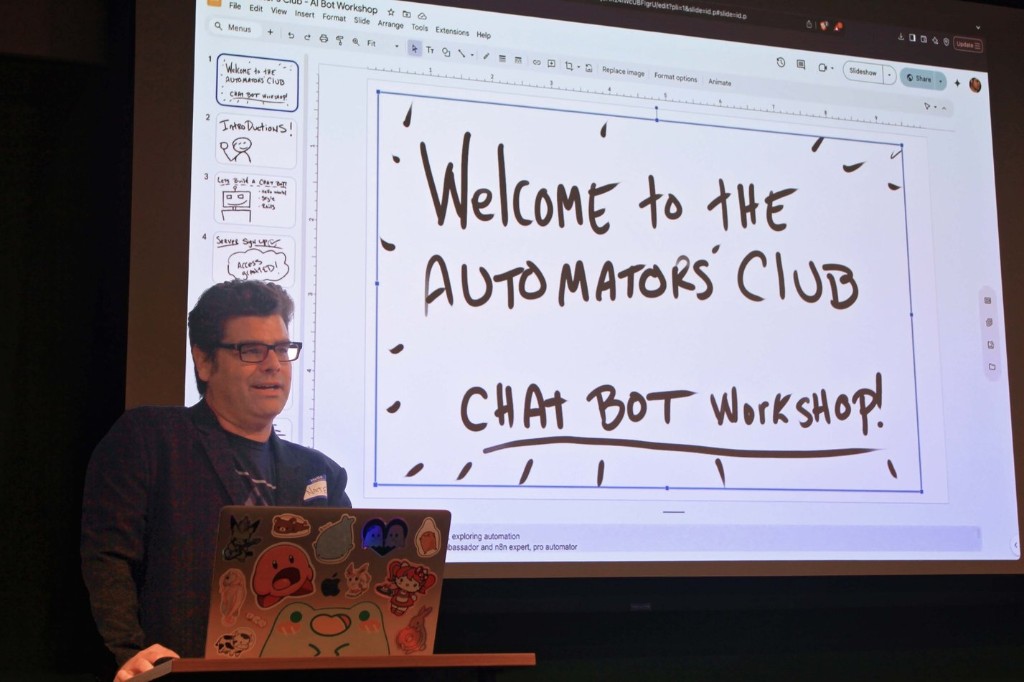
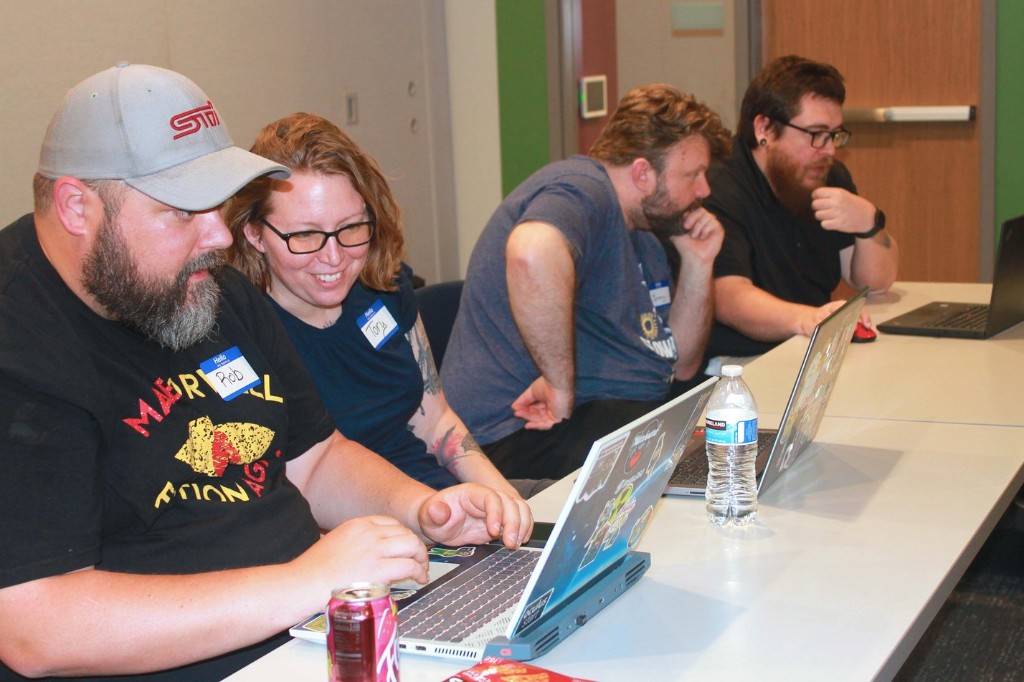
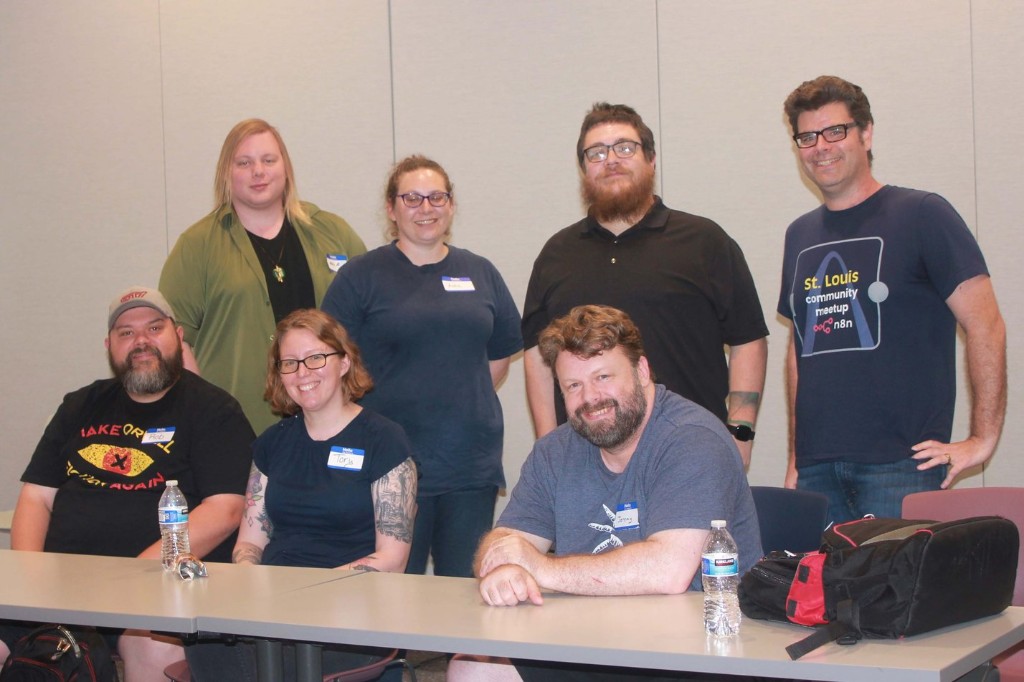
On May 31, 2025, we ran an AI building workshop with n8n at the Automators' Club. The evening walked people from introductions through a live chatbot build — and by the end, attendees had successfully built their very first AI-powered workflows.
That outcome mattered more than the slide deck. People were pairing at laptops, debugging nodes together, and leaving with automations they could extend on their own rather than notes from another presentation.

What I changed between the events
Kept the social foundation
Food and unstructured conversation made it easier for newcomers to participate without needing to arrive as experts.
Added a clearer learning path
The second meetup moved from a short product overview into a working chatbot, giving the evening a technical outcome.
Ended with participation
The group-made song turned attendees from an audience into collaborators and gave the event something memorable to share.
Wrote down what happened
I documented attendance, activities, photos, and outcomes in the November report on n8n’s community forum .
Made the May workshop outcome-first
The May 31 session was structured so every attendee left with a working AI-powered workflow — not just exposure to the tool.
- I initiated a local developer community instead of waiting for an established audience or event infrastructure.
- I treated a small first turnout as user research and used it to improve the next program.
- I designed an agenda that worked for newcomers while still creating useful technical discussion.
- I taught through a live, working automation rather than relying only on product description.
- I combined technical education, community participation, and creative experimentation into one coherent event.
- I documented the work publicly on the product’s own community forum with measurable outcomes and original media.
- On May 31, 2025, I ran an AI building workshop where attendees successfully built their first AI-powered n8n workflows.
Primary sources
- St. Louis August 2024 Meetup Report
- St. Louis November 2024 Meetup Report
- My response in n8n’s fifth-birthday community thread